InsightsNarrative DesignThe Authority Lab
How to structure a B2B SaaS LinkedIn video strategy right now
A complete guide to producing LinkedIn video for B2B software companies, from splitting company and founder content to reaching the full buying committee.
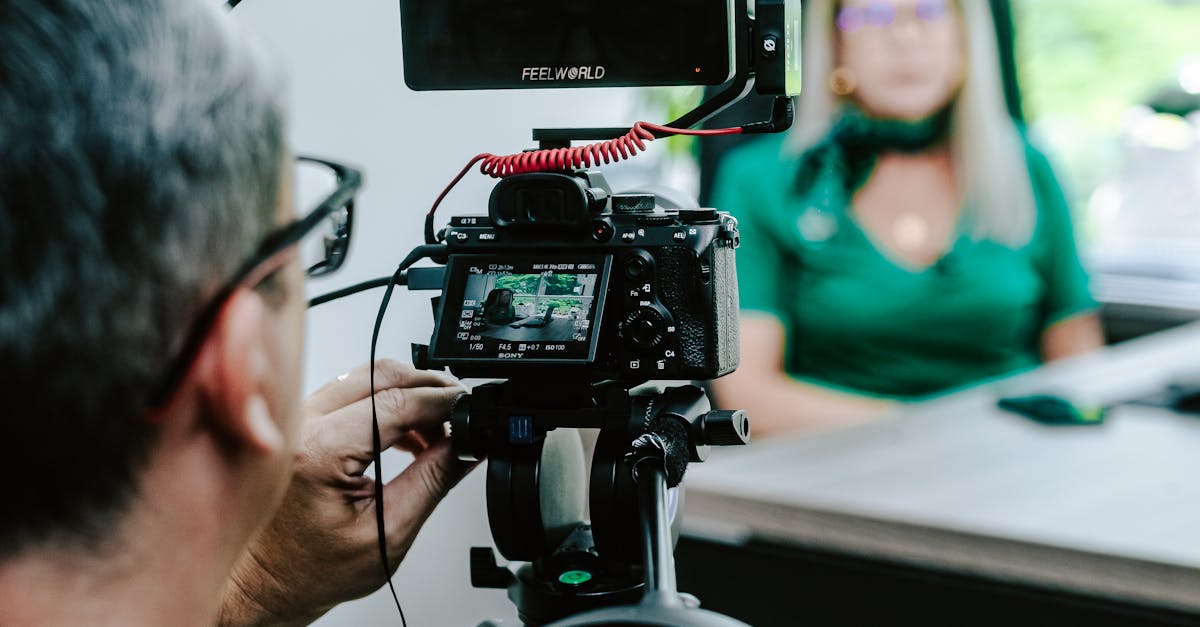
Column Five's approach to LinkedIn video for B2B SaaS brands starts with a simple rule: stop treating the platform as a single, uniform distribution feed. To reach modern software buying committees that now average upwards of a dozen stakeholders, marketing teams must split video production into two distinct tracks: high-polish product and customer stories for the company page, alongside direct, opinion-driven clips for founder and executive profiles. Committing to this dual-track model lets software companies break through corporate monotony, feed the platform's vertical video feed with content native to the format, and build an asset library that resonates with human evaluators and AI discovery systems alike.
LinkedIn video uploads are expanding at twice the pace of static posts, yet most software marketers still chop up an hour-long Zoom webinar, slap a logo on the corner, and hope the algorithm delivers pipeline. That habit wastes internal resources and ignores how enterprise software gets bought today.
Target the whole room, not just your champion
Enterprise sales cycles do not hinge on a single enthusiastic user. According to research from the LinkedIn B2B Institute Whitepaper, B2B purchase decisions now involve buying groups of up to 20 individuals. When a software contract moves toward signature, the procurement lead, the security architect, and the financial director all hold veto power. If your company only produces feature walkthroughs aimed at day-to-day operators, you lose the room the moment security and finance start evaluating risk.
The same research reveals that brands recognized across the entire buying group from the start of the evaluation are 20 times more likely to win the deal. Video is uniquely suited to build that broad recognition before a formal RFP ever lands. However, standard B2B video marketing suffers from what researchers call the Cost of Dull—an emotional neutrality where corporate messaging evaporates from memory within seconds. Plain feature rundowns and clinical product tours fail to create lasting impressions with secondary buyers who care more about business stability and risk mitigation than software settings.
To reach that entire room, B2B content marketing agencies structure video portfolios to address distinct buyer perspectives:
- The end user wants to see the workflow speed up and friction disappear.
- The team lead needs proof that adoption will not derail quarterly team milestones.
- The technical architect requires clarity on integration safety, data handling, and maintenance overhead.
- The financial buyer needs confidence that the investment protects capital and delivers measurable returns.
When video assets address these specific angles across your distribution mix, you create air cover for your internal champion. Instead of asking them to defend your software armed only with a slide deck, you equip the entire buying committee with familiar, credible impressions of your business before the final review.

Split your content by who is posting it
The central operational error in SaaS LinkedIn video is publishing everything through the company page. While company pages provide an essential home for branded proof and product explainers, personal feeds generate drastically higher organic reach and engagement. A person looking into a lens carries a level of credibility a company avatar cannot duplicate.
As outlined in Clevera's B2B SaaS playbook, high-performing software teams separate their output based on the profile hosting the content:
| Content Format | Primary Channel | Core Objective | Optimal Production Style |
|---|---|---|---|
| Product feature demo | Company Page | Clarify workflow and UI functionality | Screen recording with crisp kinetic motion |
| Customer case story | Company Page | Prove business outcomes for buyers | Polished testimonial or motion graphics |
| Category point of view | Founder Profile | Challenge industry consensus | Direct-to-camera vertical video |
| Behind-the-build lessons | Product Lead Profile | Show engineering decisions and rigor | Lo-fi desk conversation or screen share |
| Launch announcement | Both Channels | Drive initial market awareness | Polished trailer on page; founder context on personal feed |
The company page: product clarity and validation
Your corporate page serves as your catalog of capability. This is where buyers go to verify that your platform is legitimate, mature, and visually well-constructed. The content on this page should center on concrete product capabilities, technical differentiators, and customer evidence.
Use this feed for concise demo cut-downs that highlight a single workflow improvement, animated product tours, and customer proof points. If you are building high-end video assets for this track, reviewing resources like how to choose an animated explainer video company for B2B SaaS helps match visual fidelity to enterprise buyer expectations. These videos should look sharp, stay tightly edited, and function cleanly even when viewed without audio.
Founder and employee profiles: point of view and perspective
Your executive and technical team feeds are where your perspective lives. Enterprise buyers rarely buy software purely for its current feature set; they buy into where the platform is headed and whether the team behind it understands their problems.
Founders, product managers, and solution architects should record candid, direct-to-camera responses to industry trends, lessons from recent product releases, and contrarian perspectives on standard practices. When a founder explains why they intentionally omitted a popular industry feature to protect platform speed, that argument builds far more trust than a standard marketing graphic ever could.

Format for the feed you are actually in
Treating LinkedIn as an afterthought by dumping horizontal widescreen video into every placement hurts distribution. The network now runs multiple visual surfaces, each demanding specific technical framing and narrative pacing.
Organic vertical video
LinkedIn's dedicated video tab on mobile and the "Videos for You" desktop module prioritize full-screen, 9:16 vertical video. When your content appears in these algorithmic streams, it competes directly with short, punchy business perspectives, not formal corporate broadcasts.
To capture attention in vertical feeds, strip away lengthy title animations and musical introductions. Open directly with the central tension or statement within the first two seconds. Keep the visual frame tight on the speaker, place descriptive on-screen captions in the center third of the frame to avoid interface overlap, and keep total running time between 45 and 90 seconds. If an idea requires seven minutes to explain, it is an essay or an architectural webinar, not an organic vertical video.
Paid and ABM video
Paid campaigns demand a different set of visual rules. When running sponsored content targeted at specific enterprise accounts through Account-Based Marketing programs, square (1:1) and horizontal (16:9) formats often perform better across desktop feeds, where enterprise buyers spend their working hours.
Paid video requires clear graphic hierarchy. Decision-makers scrolling between meetings need to understand your core proposition without sound within three seconds. Use bold kinetic typography, crisp UI callouts, and clean data visualization to communicate complex software value propositions quickly. Every paid video should drive toward a single concrete next step, whether that is starting an interactive product tour, reviewing an architectural whitepaper, or requesting an account-specific pilot.

Build a sustainable production engine
The main reason software companies abandon LinkedIn video is production exhaustion. When marketing teams treat every video as an isolated studio project requiring external crews, bespoke scripts, and weeks of post-production reviews, consistency falls apart. A functioning video engine relies on repeatable operational systems rather than sporadic bursts of creative effort.
Start by separating high-touch studio production from high-cadence executive recording:
- Establish a recurring monthly recording session for founders and internal technical experts.
- Build a prompt bank derived from recurring sales objections, customer support tickets, and recent product release notes.
- Record three to four short responses per session using simple, high-resolution desk setups.
- Route the raw recordings through a structured editing workflow that handles pacing, framing adjustments, and caption styling.
Alongside founder recording, maximize the mileage of your tentpole marketing campaigns. When Column Five partnered with Instacart Ads, our team transformed a single conceptual framework from concept to market in two weeks with 115+ campaign assets, as detailed in our published case studies.
A single comprehensive product launch, animated explainer, or benchmark report should feed your LinkedIn presence for months. Extract five-second UI loops for retargeting, create twenty-second feature cut-downs for your company page, and have your leadership team film short commentary videos explaining the data behind the launch. As Keith Messick, CMO at Vercel, observed about working with creative partners, the true superpower is taking raw ideas and making them "50x better."
Run your team on a strict weekly production cadence. Review engagement metrics, retention curves, and qualitative sales feedback every seven days. If viewers consistently drop off at the twelve-second mark of your demo videos, trim your setup text and get straight to the user interface. If founder videos that tackle controversial engineering decisions drive inbound connection requests from target accounts, double down on those themes.
Review your company's last five LinkedIn video posts right now. If every video was published from your company page, opens with an animated corporate logo, and relies on generic background music, your strategy is falling flat in the feed. Modern software buyers demand clear product proof and distinct human perspectives. You can refine your brand's unique point of view and turn it into a high-performing video engine by visiting Column Five.